
Why Your YouTube Channel Isn't Growing (AI Fixes)
A counter-intuitive look at why most YouTube channels plateau, and how AI fixes the publishing-consistency bottleneck that keeps creators from growing in 2026.
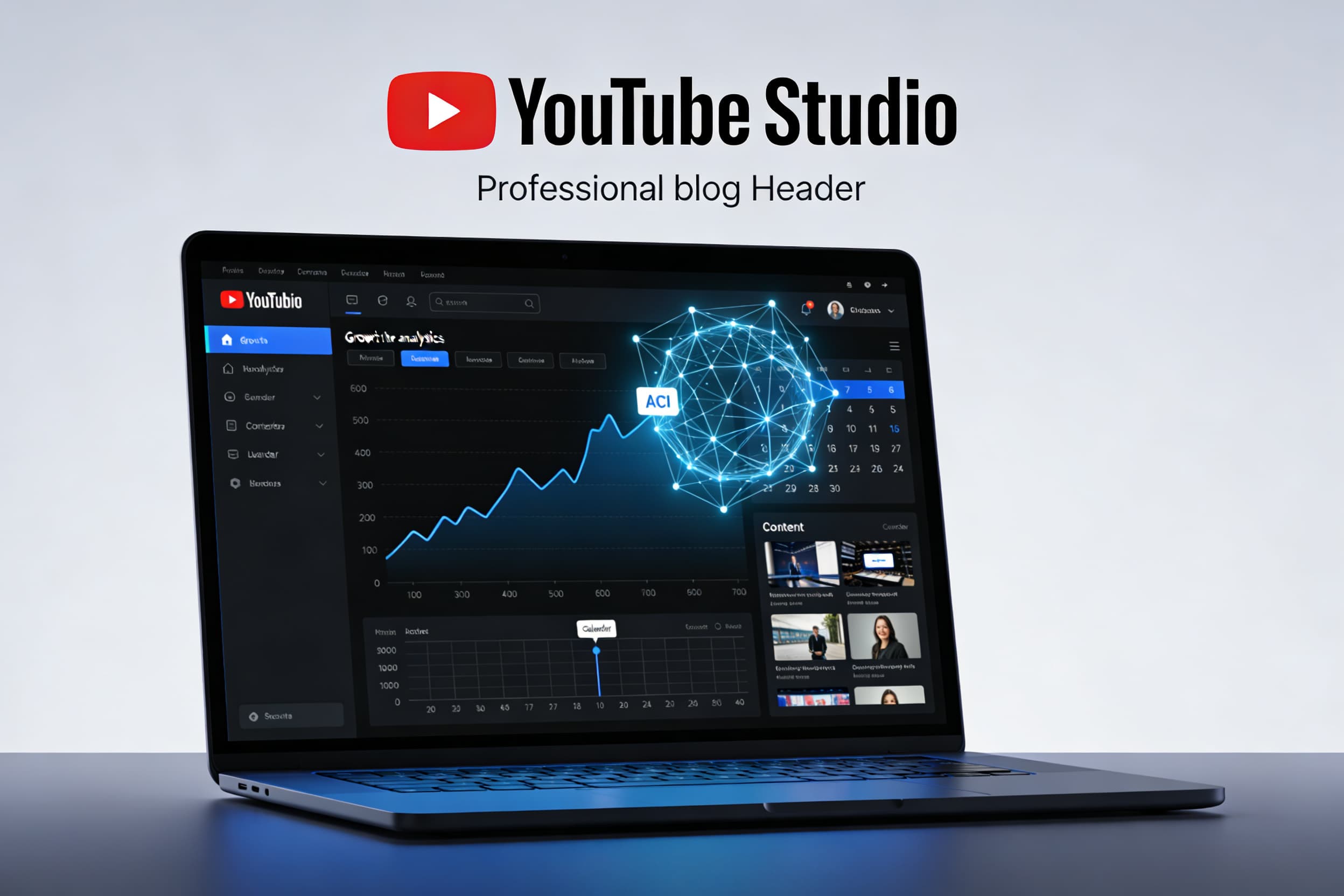
Most creators blame the algorithm when their YouTube channel stops growing. The algorithm is rarely the actual problem. The actual problem is publishing consistency, and the actual cause of inconsistent publishing is that the workflow between "video recorded" and "video published" is too slow, too manual, and too dependent on a single person to keep doing it week after week. That is the bottleneck, and AI fixes it in ways that are not obvious until you see them.
The conventional wisdom says you need better content, better thumbnails, better titles, and a better hook in the first three seconds. None of that is wrong, but it misses the point. The creators who grow on YouTube in 2026 are not the ones with the best production quality or the cleverest hooks. They are the ones who have figured out how to publish consistently enough that the algorithm learns to trust their channel and keeps showing their videos to new viewers. Everything else is a multiplier on top of consistency.
This guide walks through the real reasons channels plateau, the specific ways AI removes the bottlenecks that cause plateaus, and a practical framework for turning your channel into a growth engine rather than a content lottery. The advice is built for solo creators, small teams, and agencies who want a predictable publishing cadence without burning out.
You will also see the most common mistakes that look like growth problems but are actually workflow problems in disguise. Treating a publishing-consistency issue as a content-quality issue leads to expensive investments in better cameras, better scripts, and better editors, while the actual fix sits one level deeper in the workflow. The right diagnosis matters, and the right diagnosis almost always involves the publishing cadence rather than the production quality.
By the end of this guide you will have a clear picture of what is really holding your channel back, a practical plan to fix it using AI-assisted publishing, and a way to measure whether the changes you make are actually moving the channel in the right direction. The goal is not a single viral hit. The goal is a channel that compounds quietly, week after week, until growth becomes the default rather than the exception.
Quick Answer
Most YouTube channels plateau because of publishing-consistency problems, not content-quality problems. The bottleneck is the workflow between a finished recording and a published video, and that workflow is where most creators lose hours every week to manual editing, metadata writing, thumbnail creation, and scheduling.
AI fixes the bottleneck by collapsing that workflow into a single flow. One long recording becomes a batch of clips with captions, titles, descriptions, thumbnails, and scheduled publish times — all in the same platform. The result is a publishing cadence that the algorithm can learn to trust, which is what actually drives channel growth in 2026.
The real reason most YouTube channels plateau
A YouTube channel grows when the algorithm decides your videos are worth showing to new viewers. The algorithm makes that decision based on signals it can measure: click-through rate, average view duration, engagement velocity, and how often you publish. The first three depend on the content itself, but the fourth depends on your workflow, not your talent. Channels plateau when the workflow becomes a ceiling on publishing volume, and the algorithm quietly stops treating them as a consistent source of new content.
The plateau does not look like a sudden drop. It looks like flat growth despite continued effort. You publish a video, it does decently, you publish another, the next one does slightly better, and then a week passes before the next upload. The algorithm does not punish you for the gap, but it does stop prioritizing your content, because the consistent publishing signal is missing. New viewers see fewer of your videos, your subscriber growth slows, and you start wondering whether the algorithm has changed.
The algorithm has not changed. The signal has changed. The fix is to publish more often, with the same quality, on a consistent schedule. The challenge is that most creators cannot do that without burning out, because the manual workflow between recording and publishing is too slow. AI fixes the workflow, which fixes the cadence, which fixes the signal the algorithm uses to grow your channel.
Why more content beats better content in 2026
The conventional wisdom holds that quality always wins, and there is a version of that wisdom that is true: a single bad video can hurt your channel's reputation. But the more useful version of the truth for most channels is that consistent output of decent quality beats sporadic output of great quality. The algorithm rewards consistency, and consistent output also gives you more shots on goal, which means more chances to find what resonates with your audience.
Think about the channels you watch that grew fast. Most of them did not produce one perfect video per month. They produced several decent videos per week, learned from the analytics, and iterated quickly. Their growth came from the feedback loop between publishing and measuring, not from any single viral hit. Once that loop is running at a fast cadence, the algorithm learns the channel's audience and starts matching new viewers to the right videos automatically.
This is the part that is hard to accept for creators who came up producing fewer, more polished videos. The new YouTube is a publishing-consistency game, and AI lets you participate in that game without giving up everything else in your life. The right mindset is not "I need to make better content." The right mindset is "I need to ship more often, learn from each batch, and let the compounding effect do the work."
The publishing workflow is the actual bottleneck
Map every step between "video recorded" and "video live on YouTube" for a typical creator. There is uploading, organizing, drafting titles, writing descriptions, designing thumbnails, choosing tags, scheduling, double-checking metadata, and finally clicking publish. Each step takes time, and most creators handle each step in a different tool. The friction of switching between tools, re-entering metadata, and waiting for slow interfaces adds up to several hours of work per video.
For a creator publishing weekly, the workflow is manageable. For a creator publishing three or more times a week, the workflow becomes a part-time job on top of the actual creation work. Most creators hit a wall at two to three videos per week because that is the maximum the workflow can sustain without burning out. The wall feels like a content-quality issue, but it is really a workflow capacity issue.
AI collapses the workflow. Uploading, drafting metadata, generating thumbnails, scheduling, and publishing all happen in the same platform. The per-video time drops from hours to minutes, and the weekly capacity ceiling moves from two to three videos up to five, eight, or twelve. The ceiling moves because the friction moves, and the friction moves because the workflow is no longer the bottleneck.
What AI actually fixes in the publishing workflow
| Item | Details |
|---|---|
| Metadata generation | AI drafts multiple title options, description drafts, tag sets, and hashtag suggestions for every clip. The review pass is fast, and the result is consistent across a batch. |
| Thumbnail creation | AI selects visually strong frames from the video and overlays text. For creators with a brand-trained model, the thumbnails match the channel's visual style automatically. |
| Captions and subtitles | Auto-captions with punctuation, line breaks, and brand-consistent styling. Review is fast, and the captions match what was actually said in the audio. |
| Clip extraction | For long-form video, AI identifies the strongest moments and creates short-form clips ready for YouTube Shorts and TikTok. Each clip comes with its own metadata. |
| Scheduling and publishing | Schedule an entire batch of clips across the week with one click. Connect YouTube and TikTok once, and the publishing happens automatically at the times you specified. |
| Analytics feedback | Use the analytics from each batch to refine the next batch. AI surfaces patterns in what works, so the workflow learns and improves every week. |
Why consistency compounds over time
Publishing more often does not just give you more chances to be seen. It teaches the algorithm what your channel is about, who watches you, and which of your videos perform best. After a few months of consistent publishing, the algorithm matches new viewers to your videos with much higher accuracy. Your click-through rate goes up because the right viewers see your content, your watch time goes up because the right viewers stay, and your channel growth accelerates without any change in production quality.
The compounding effect is invisible week to week. The growth looks flat, then flat, then suddenly meaningful. That is the signal of compounding, and it is what separates channels that grow from channels that plateau. The plateau is not the absence of growth. It is the absence of compounding, and the absence of compounding is almost always a publishing-cadence problem.
This is also why the cost of giving up is high. Creators who publish for 6 months and quit miss the moment where compounding kicks in. Creators who publish for 12 to 18 months consistently almost always see meaningful growth, because they have crossed the threshold where the algorithm treats them as a reliable source of new content. The work is the same; the payoff is delayed. AI lets you sustain the work for long enough to reach the payoff.
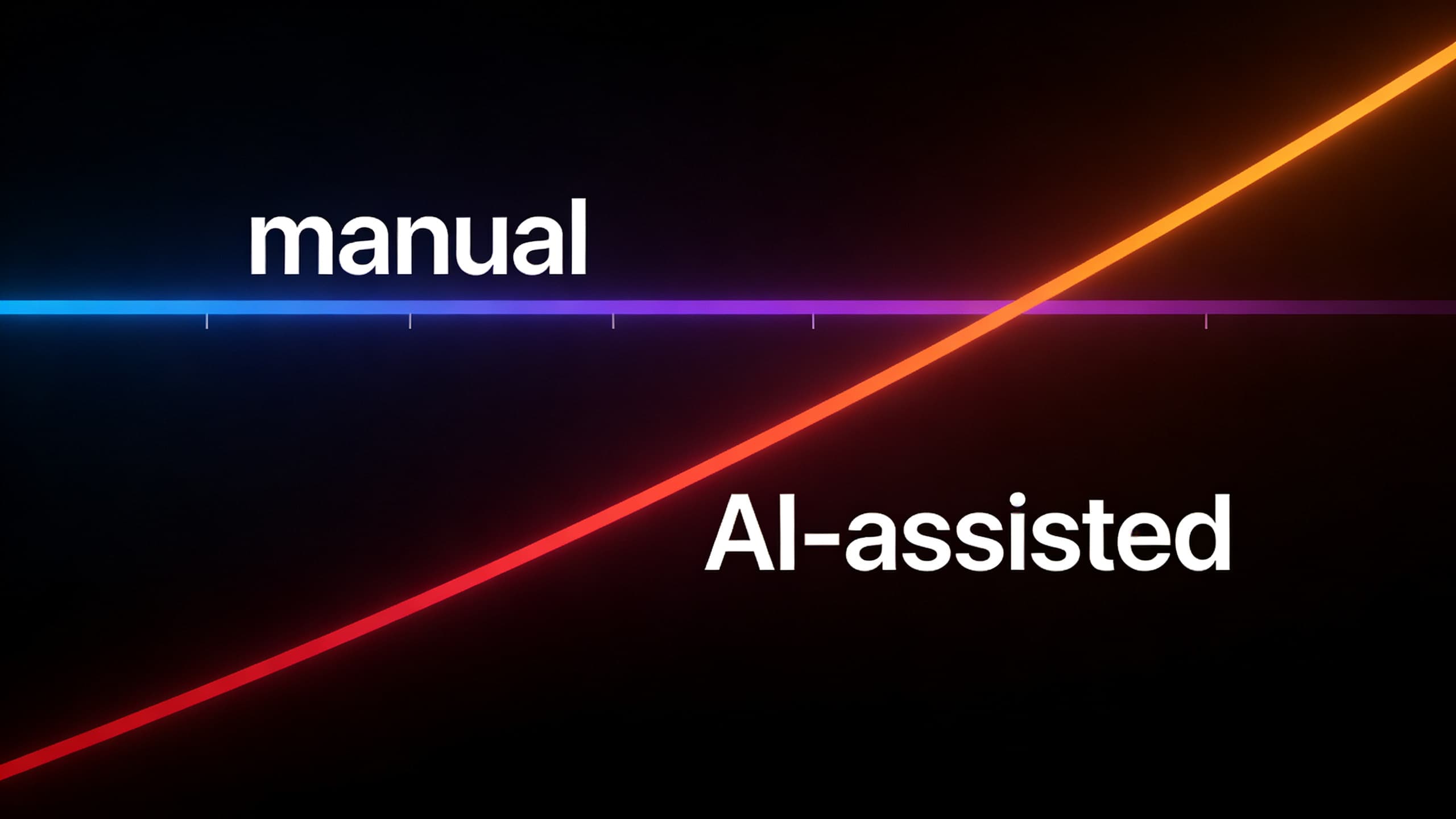
Three publishing models and which one fits your channel
Model 1: One long video per week
Model 2: One long video plus 3 to 5 Shorts per week
Model 3: 5 to 10 Shorts per week, no long-form
What the first 30 days of an AI-assisted workflow look like
Week 1: Audit your current workflow
Week 2: Move the workflow into one AI-assisted platform
Week 3: Ship your first AI-assisted batch
Week 4: Lock in a sustainable publishing cadence
Mistakes that look like growth problems but are really workflow problems
Most creators who think they have a growth problem actually have a workflow problem in disguise. The diagnosis is wrong, the fix is wrong, and the channel keeps plateauing because the real issue is not being addressed. Watch for these patterns in your own channel:
- Buying better equipment when the bottleneck is publishing cadence. Better cameras do not help if you publish twice a month instead of twice a week.
- Hiring an editor when the bottleneck is metadata. Editors help with the production, but the workflow around the production is often the real ceiling.
- Studying the algorithm for hours when the bottleneck is consistency. The algorithm rewards consistent output; understanding it does not generate the output.
- Re-recording a video because the analytics were bad. The analytics are usually a function of the title, thumbnail, and first three seconds — not the content quality.
- Switching niches because the previous one did not grow. The previous niche did not grow because the publishing cadence was too low, not because the niche was wrong.
- Treating every video as a flagship launch. The high-effort approach works for one video per quarter, not for weekly publishing, and it burns out the creator.
- Posting only when motivated. Motivation is a finite resource. A workflow that runs whether you are motivated or not is what separates growing channels from plateaued ones.
The publishing-cadence threshold most channels never cross
Based on the patterns visible across thousands of YouTube channels, the threshold where compounding kicks in for most niches is somewhere between 8 and 12 videos per month, with at least half of those being Shorts. Channels below that threshold can still grow, but the growth is linear and slow. Channels above that threshold start to see exponential growth as the algorithm treats them as a consistent source of new content in their niche.
The threshold is not magic. It is the point at which the algorithm has enough data about your channel to make accurate matching decisions. Below the threshold, the algorithm is still learning who you are and who watches you. Above the threshold, the algorithm is matching new viewers to your videos with high confidence, which is when growth becomes the default.
Most creators who plateau are publishing 4 to 6 videos per month, which is below the threshold. The fix is not to publish one more video; it is to publish enough videos that the algorithm can learn your channel. AI makes the threshold reachable for solo creators, and it is the single biggest growth lever most channels are not pulling.
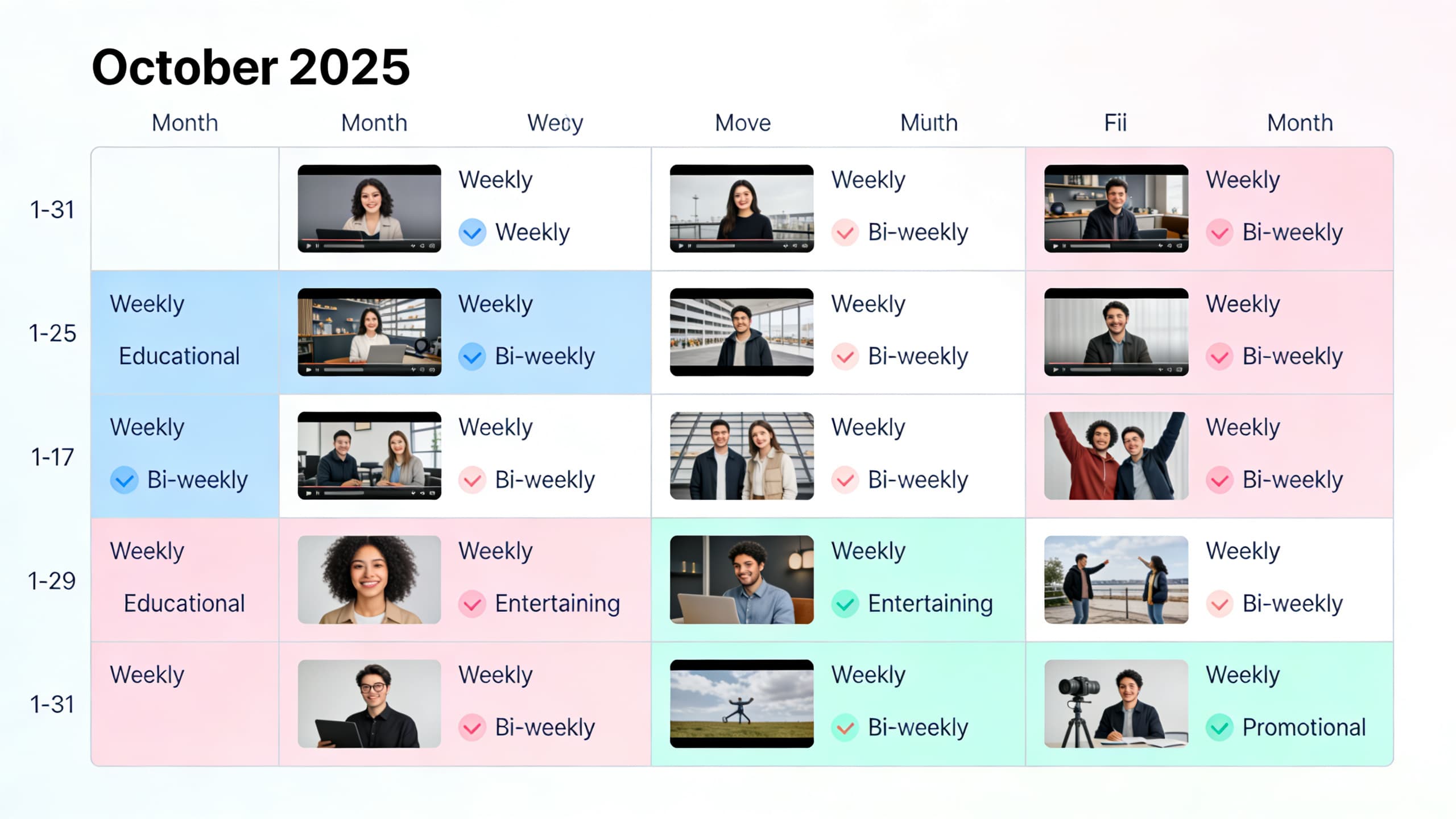
How to measure whether the workflow change is actually working
The two metrics that matter most for this kind of change are minutes per published video and videos per week. Minutes per video should drop sharply in the first two weeks of using an AI-assisted workflow, and videos per week should rise. Watch these two numbers together. If the time per video drops but the publishing volume does not rise, the time saved is being absorbed somewhere else, and you should re-audit the workflow.
The second-tier metrics are impressions per video, click-through rate, and average view duration. These should improve over a 30 to 60 day window as the algorithm learns the new, more consistent publishing signal. If they are flat, the cadence is the problem but not the only problem, and the next layer to audit is metadata, thumbnails, and the first three seconds of each video.
The third-tier metric is subscriber growth per month. This is the slowest to respond and the most volatile in the short term, so do not chase it. Subscribe growth is the lagging indicator; impressions and CTR are the leading indicators. Focus on the leading indicators, and subscriber growth will follow once the algorithm has enough data to trust the new cadence.
What the algorithm actually weighs in 2026
Three signals drive almost every algorithmic decision YouTube makes about your channel. The first is click-through rate, which measures how often viewers click your video when they see it in their feed, search results, or recommendations. CTR is mostly a function of the title and thumbnail, and it is the easiest signal to optimize once you have a publishing cadence that gives the algorithm enough impressions to learn from.
The second is average view duration and completion rate, which measure how long viewers actually watch. AVD is mostly a function of the hook, the pacing, and the match between viewer expectation and video content. The first three seconds of a video are disproportionately important because they decide whether the viewer commits past the first retention check, but the entire video contributes to the signal.
The third is engagement velocity, which measures how fast your video earns likes, comments, and shares in the first 30 to 60 minutes after publishing. Velocity is a function of how well your existing audience is primed to engage with new content, which is itself a function of consistent publishing. Channels that publish regularly have audiences in the habit of engaging, which boosts velocity on every new video. Channels that publish sporadically do not, and the algorithm notices.
Single-platform focus versus cross-platform distribution
You will eventually face the question of whether to focus on YouTube or distribute the same content across YouTube, TikTok, Instagram, and LinkedIn. The answer depends on your niche and your team, but the underlying principle is the same: distribution compounds when the workflow is integrated, and it fragments when each platform has its own manual process.
For solo creators, a single-platform focus usually wins for the first 6 to 12 months, because the depth of understanding the platform's algorithm matters more than the breadth of distribution. For small teams, cross-platform distribution becomes viable once the AI-assisted workflow is in place, because the marginal cost of publishing the same clip on a second or third platform is near zero.
The mistake is to spread thin too early. A creator who publishes 2 videos per month across 3 platforms is publishing less on each platform than a creator who publishes 6 videos per month on 1 platform. The compounding effect is per platform, not across platforms, so a focused approach almost always wins until the workflow can support higher volume on a single platform first.
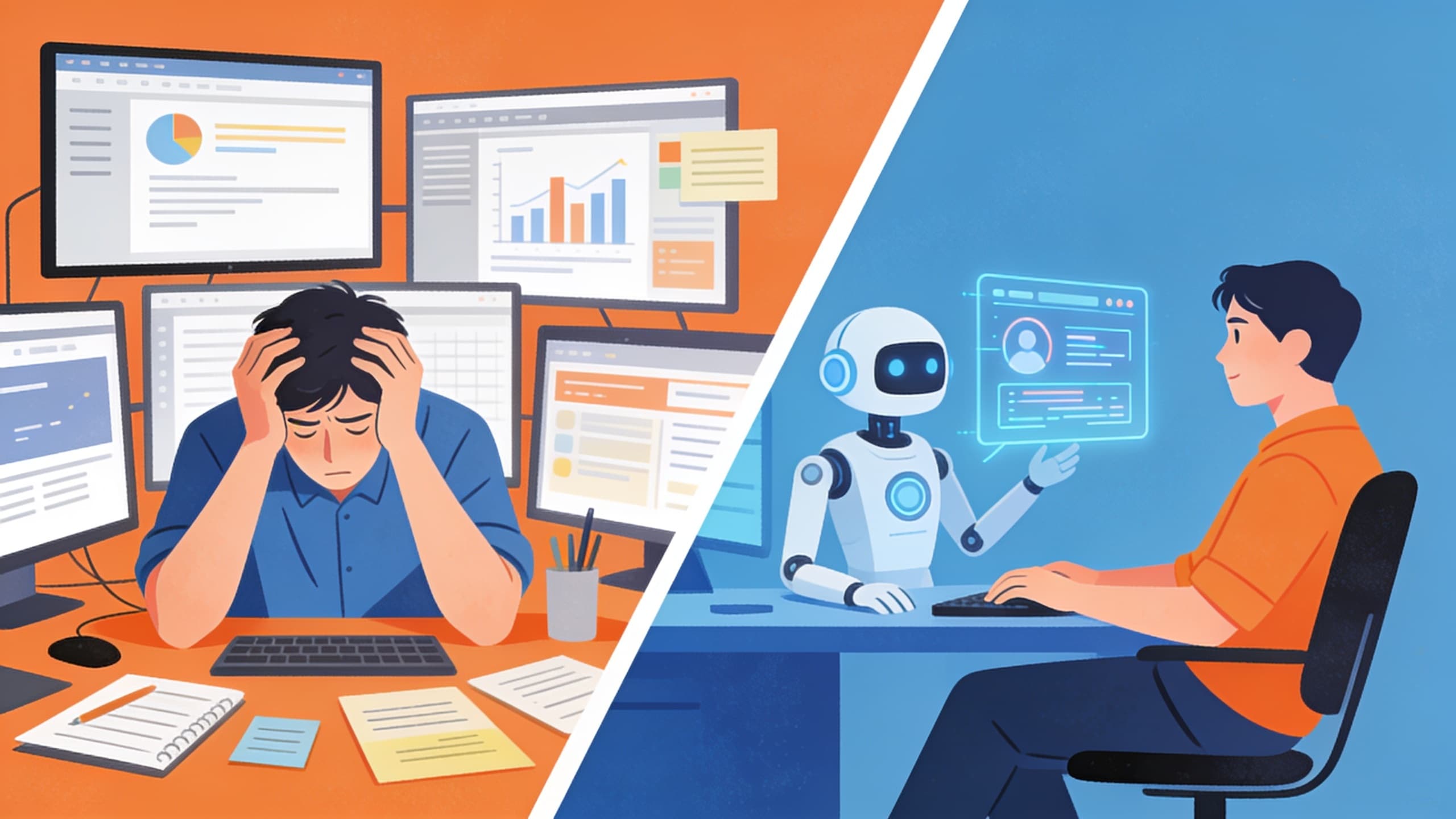
The role of channel art, banner, and identity in growth
Channel art, banner, profile picture, and about section do not directly drive algorithmic growth, but they do drive the conversion rate from viewer to subscriber. A new viewer who lands on your channel page and sees a clear niche, a consistent visual identity, and a sense of what the channel is about is much more likely to subscribe than one who sees a placeholder banner and a vague description.
This is where AI-assisted branding pays off in a subtle way. If the AI generates thumbnails, captions, and metadata that match the channel's visual style, the channel reads as a coherent brand from the very first video. Viewers who land on the channel page recognize the style from the video they just watched, and the consistency makes subscribing feel like joining a recognizable show rather than following a random creator.
Spend an hour setting up your channel art, banner, and about section properly. It is the smallest investment with the largest long-term return, because every new viewer who lands on your channel sees it. Pair that with a consistent AI-assisted workflow, and the channel starts to look and feel like a media property rather than a one-person project. That perception drives subscriptions, which drives the algorithm, which drives growth.
Why the first 1,000 subscribers are the hardest
The first 1,000 subscribers are disproportionately hard to acquire because the algorithm does not yet have enough data about your channel to make accurate matching decisions. Every subscriber at this stage is won through direct effort: search traffic, recommendations from other channels, social shares, and word of mouth. The compounding effect is not yet active, so growth feels slow and effortful.
This is the stage where most creators give up. The math looks discouraging: 5 subscribers per video, 4 videos per month, 200 new subscribers every 6 months. The right framing is different. The first 1,000 subscribers are the foundation, not the goal. They are the audience that the algorithm will use to learn who watches your content, and once the algorithm has learned, the next 1,000 come much faster.
AI helps at this stage by reducing the per-video time, which lets you ship more videos and accelerate the learning phase. The first 100 videos you publish teach the algorithm who you are. After that, the algorithm starts matching new viewers to your content automatically, and growth shifts from effortful to compounding. The 1,000-subscriber threshold is the start of that shift, not the end of the work.
The burnout trap and how to avoid it
The biggest risk of moving to a higher publishing cadence is burnout. The whole point of using AI is to make the workflow sustainable, not to replace one form of exhaustion with another. Watch for the signs: a creeping sense that publishing is a chore, declining interest in the topic, and the urge to skip the review pass because the AI generated something. Those are all signs that the cadence is too high and the workflow needs to absorb the time saved elsewhere.
The right cadence is the one you can sustain for 12 to 18 months, not the one that looks impressive in a launch announcement. If 5 videos per week is what the AI-assisted workflow can comfortably produce, that is the right target. If 10 is the maximum the AI can produce but you can only review 5 with quality, 5 is the right target. The discipline is matching the cadence to your actual review capacity, not to the AI's output capacity.
A good way to think about it: the AI is the engine, and you are the driver. A faster engine does not mean you have to drive faster. Use the saved time to invest in the things that make each video better — stronger hooks, sharper titles, better thumbnails, more thoughtful metadata — and let the cadence be the natural output of a more efficient process rather than a forced target.
Internal routes to support your channel growth
HypeNest features overview
HypeNest for content creators
Free AI video title generator
HypeNest pricing
FAQ
Why is my YouTube channel not growing?
Is it the algorithm or my content?
How many videos per week should I publish?
How does AI help with YouTube growth?
Will better equipment help my channel grow?
How long does it take to see growth after changing the workflow?
Should I switch niches if my current one is not growing?
Is publishing more Shorts a faster way to grow?
How do I avoid burnout while publishing more?
Can a small channel still grow with AI?
What is the publishing cadence threshold?
Do I need to make every video perfect?
How do I know if my channel is below the threshold?
Can I cross the threshold without AI?
What is the single biggest lever for channel growth?
Turn your channel into a growth engine, not a content lottery
The bottleneck is the workflow, not the content. Use HypeNest to collapse uploading, metadata, thumbnails, scheduling, and publishing into a single flow, and ship at a cadence the algorithm can trust. Start free and run your first batch this week.